
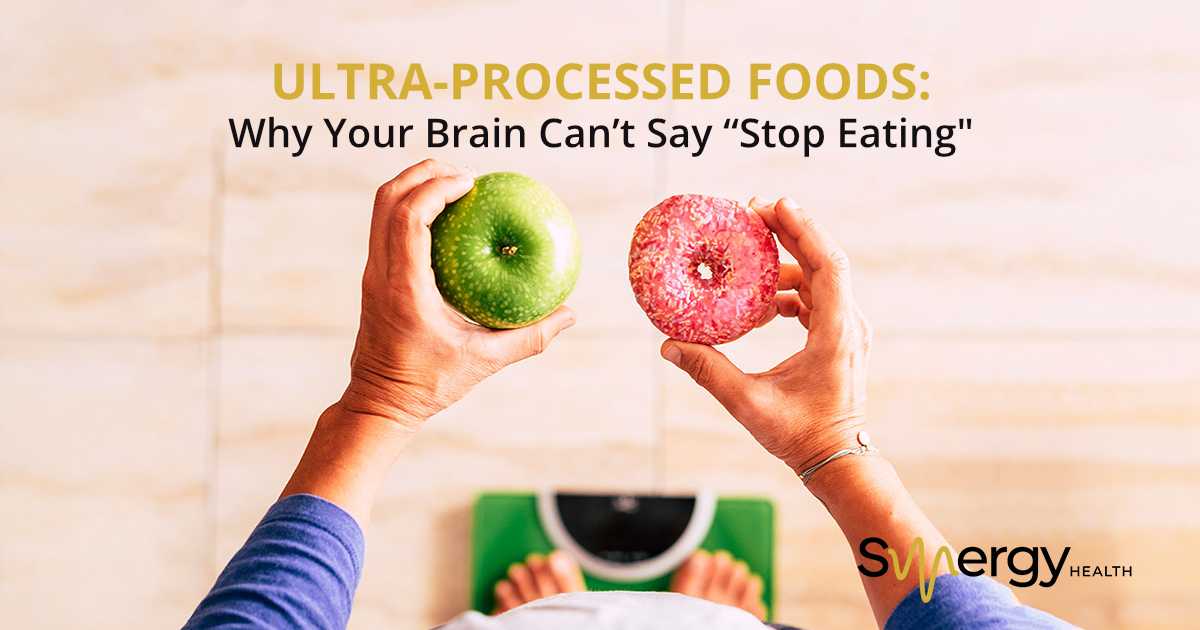
As a board-certified obesity medicine physician, I wish I could tell you that weight loss is simply about willpower and calories. But the truth is far more complex—and understanding ultra-processed foods is key to understanding why so many people struggle despite their best efforts.
Let me be blunt: ultra-processed foods are engineered to make you overeat. This isn’t a moral failing on your part. It’s not weakness. It’s biology being hijacked by industrial food processing.
What Exactly Are Ultra-Processed Foods?
Ultra-processed foods (UPFs) aren’t just “processed.” There’s a big difference between:
- Minimally processed: Bagged spinach, roasted nuts, frozen vegetables
- Processed: Cheese, canned beans, bread
- Ultra-processed: Packaged snacks, sugary cereals, frozen dinners, fast food, candy, sodas, flavored yogurts with additives, protein bars with 30 ingredients, instant noodles, chicken nuggets, packaged baked goods
Ultra-processed foods typically contain ingredients you wouldn’t find in a home kitchen: emulsifiers, preservatives, artificial colors, flavor enhancers, and modified starches. They’re engineered for long shelf life, low cost, and maximum palatability—not for your health.
The Landmark Study That Changed Everything
A groundbreaking randomized controlled trial published by the National Institutes of Health fundamentally changed how we understand ultra-processed foods. Researchers had participants eat two different diets for two weeks each:
- An ultra-processed diet
- An unprocessed diet
Here’s the critical part: both diets were carefully matched for total calories, carbohydrates, protein, fat, sugar, sodium, and fiber. On paper, they were nutritionally identical. Participants could eat as much as they wanted of either diet.
The results were shocking: people eating the ultra-processed diet consumed an extra 508 calories per day compared to the unprocessed diet. They gained 0.9 kg (about 2 pounds) in just two weeks, while those on the unprocessed diet actually lost weight.
Same macronutrients. Same fiber. Same sugar content on paper. Completely different outcomes.
This study, published in a top-tier medical journal, demolished the simplistic “a calorie is a calorie” argument. Something about ultra-processing fundamentally changes how food interacts with your body and brain.
Why Can’t You Stop Eating Them?
Ultra-processed foods sabotage your satiety—your feeling of fullness—through multiple biological mechanisms:
1. They’re Designed to Be Eaten Fast
The soft texture and disrupted cellular structure of ultra-processed foods means you can eat them incredibly quickly. Think about how long it takes to eat a chicken breast versus chicken nuggets. A baked potato versus potato chips. An apple versus applesauce.
Eating rate is strongly associated with increased calorie intake. Your satiety signals take 15-20 minutes to register in your brain. When you can consume 800 calories in 5 minutes (hello, large fries and a shake), you’ve already overshot before your brain realizes you’re full.
2. They Spike and Crash Your Blood Sugar
Industrial processing removes fiber and disrupts food structure, causing rapid absorption. This creates sharp glucose and insulin spikes followed by crashes that trigger intense hunger—even if you just ate a large meal.
Research published in JAMA found that ultra-processed foods consumed by Americans contained more carbohydrates from low-quality sources, reflected by high added sugars and low fiber and protein. The processing itself changes the food’s physical structure and chemical composition, creating an elevated glycemic response and reduced satiety beyond just the sugar content.
You’ve experienced this: eat a doughnut at 9 AM, starving again by 10:30. Eat eggs and vegetables at 9 AM, satisfied until 1 PM. Same calories, radically different satiety.
3. They Hijack Your Brain’s Reward System
Ultra-processed foods contain hyperpalatable combinations of ingredients, additives, and textures that don’t exist in nature. These combinations are specifically engineered to enhance palatability and influence reward-related brain activity.
Your brain evolved to seek out calorie-dense foods because for most of human history, calories were scarce. Food companies exploit this evolutionary wiring by creating combinations of sugar, fat, salt, and texture that trigger intense reward signals—stronger than anything found in whole foods.
The result? You keep eating even when you’re physically full because the reward system is overpowering your satiety signals.
4. They Disrupt Your Gut-Brain Communication
Your gut produces hormones that tell your brain when you’re full—including GLP-1 (yes, the same hormone in Wegovy and Ozempic), PYY, ghrelin, and others. Ultra-processed foods and refined sugars disrupt the gut-brain axis by altering your gut microbiome.
These foods are characterized by elevated fat and sugar with reduced fiber, leading to changes in how your gut bacteria produce metabolites and communicate with your brain. Research published in Nature Reviews Endocrinology shows that ultra-processed foods may disrupt these appetite-regulating hormones, though we’re still learning exactly how.
Think of it this way: ultra-processed foods jam the signal between your gut and brain. Your gut is trying to tell your brain “we’re full,” but the message isn’t getting through clearly.
The Energy Density Problem
Ultra-processed foods typically pack a lot of calories into a small volume. A 100-calorie apple takes time to eat and fills your stomach. A 400-calorie granola bar is gone in seconds and barely registers.
High energy density combined with low satiety is a recipe for weight gain. You can easily consume 2,000+ calories of ultra-processed foods without ever feeling truly satisfied, while 1,500 calories of whole foods would leave you comfortably full.
The Real-World Impact
Here’s what this means for you: if the majority of your diet consists of ultra-processed foods, you are fighting an uphill battle against your own biology.
It’s not that you lack discipline. It’s that you’re trying to use willpower to overcome:
- Engineered hyperpalatability designed to override satiety
- Rapid eating rates that prevent satiety signals from registering
- Blood sugar crashes that trigger hunger
- Disrupted gut-brain communication
- High energy density that allows massive calorie intake without satisfaction
No amount of willpower consistently overcomes these biological mechanisms. Some people can white-knuckle it for weeks or months, but eventually, biology wins.
What Should You Eat Instead?
The answer isn’t extreme elimination or perfectionism. It’s about shifting the balance toward minimally processed whole foods:
Prioritize:
- Vegetables and fruits (fresh or frozen)
- Whole grains (oats, brown rice, quinoa)
- Lean proteins (chicken, fish, eggs, legumes)
- Nuts and seeds
- Plain yogurt (add your own fruit)
- Water, unsweetened tea, black coffee
Minimize:
- Packaged snacks and baked goods
- Sugary cereals and breakfast bars
- Fast food and frozen dinners
- Soda and sweetened beverages
- Candy and processed desserts
- Highly processed meats
Notice I said “minimize,” not “eliminate.” Perfectionism backfires. If 80-90% of your diet is whole foods, the occasional ultra-processed food isn’t going to derail you.
Practical Steps to Reduce Ultra-Processed Foods
- Shop the perimeter of the grocery store: That’s where the whole foods live—produce, meat, dairy. The center aisles are dominated by ultra-processed foods.
- Read ingredient lists, not just nutrition labels: If there are more than 5 ingredients, or if you can’t pronounce half of them, it’s probably ultra-processed.
- Cook more meals at home: You control the ingredients and processing level. Even simple cooking—roasting vegetables, grilling chicken, making eggs—is infinitely better than packaged alternatives.
- Prep whole foods for convenience: Pre-cut vegetables, hard-boiled eggs, cooked chicken breast. Make whole foods as convenient as processed ones.
- Replace one ultra-processed food at a time: Don’t overhaul everything at once. Swap sugary cereal for oatmeal with fruit. Replace chips with nuts. Exchange soda for sparkling water with lemon.
When Diet Changes Aren’t Enough
Here’s the reality I see in my practice: some patients make significant dietary improvements—reducing ultra-processed foods, increasing protein, eating more vegetables—and still struggle to lose weight.
Why? Because often there are underlying metabolic dysfunctions that diet alone cannot overcome:
- Insulin resistance: Your cells don’t respond properly to insulin, promoting fat storage
- Hypothyroidism: Your metabolism is suppressed
- Hormonal imbalances: PCOS, low testosterone, cortisol dysregulation
- Gut microbiome damage: Years of poor diet have fundamentally altered your gut bacteria
- Medication side effects: Certain medications promote weight gain
At Synergy Health in Lewisville, we don’t just hand you a meal plan and wish you luck. We dig deeper:
- Comprehensive metabolic testing to identify underlying issues
- Medical nutrition therapy that addresses your specific metabolic profile
- Supervised exercise in our on-site facility—no more “I’ll recommend exercise and hope they do it”
- Evidence-based medications when appropriate, including GLP-1 agonists that restore proper satiety signaling
- Ongoing monitoring and adjustment because weight loss isn’t linear
We understand that ultra-processed foods have disrupted your body’s natural ability to regulate hunger and fullness. Sometimes restoring that regulation requires medical intervention beyond dietary changes alone.
The Bottom Line
Ultra-processed foods are engineered to make you overeat. They disrupt satiety signals, spike and crash blood sugar, hijack your brain’s reward system, and alter gut-brain communication. The landmark NIH study proved that even when calories and macronutrients are matched, people consume significantly more calories from ultra-processed foods.
Reducing ultra-processed foods and emphasizing whole foods is one of the most powerful changes you can make for weight loss and overall health. But if you’ve made these changes and still struggle, don’t blame yourself—investigate whether underlying metabolic dysfunction is sabotaging your efforts.
At Synergy Medical, we provide comprehensive, medically-supervised weight loss that addresses not just what you eat, but why your body responds the way it does. We combine nutritional science, medical expertise, and when needed, FDA-approved medications to help you achieve sustainable results.
Schedule a consultation, and let’s figure out why your body isn’t responding the way it should—and what we can do about it.
Dr. Essam – Board-Certified in Internal Medicine & Obesity Medicine
Synergy Weight Loss and Primary Care | Lewisville, Texas
 Dr. Essam Babar is a board-certified physician in Internal Medicine and Obesity Medicine, and founder of Synergy Medical, an integrated weight loss clinic combining evidence-based medical treatment with supervised exercise programming.